Coffee Shop POS Software: What 58,000 Independent Cafés Actually Use in 2026
Considering a coffee shop POS software in 2026? See what 58,000 independent cafés use today, common pitfalls, and how to choose the right system as you grow.
Lindsay Angelo
Feb 9, 2026
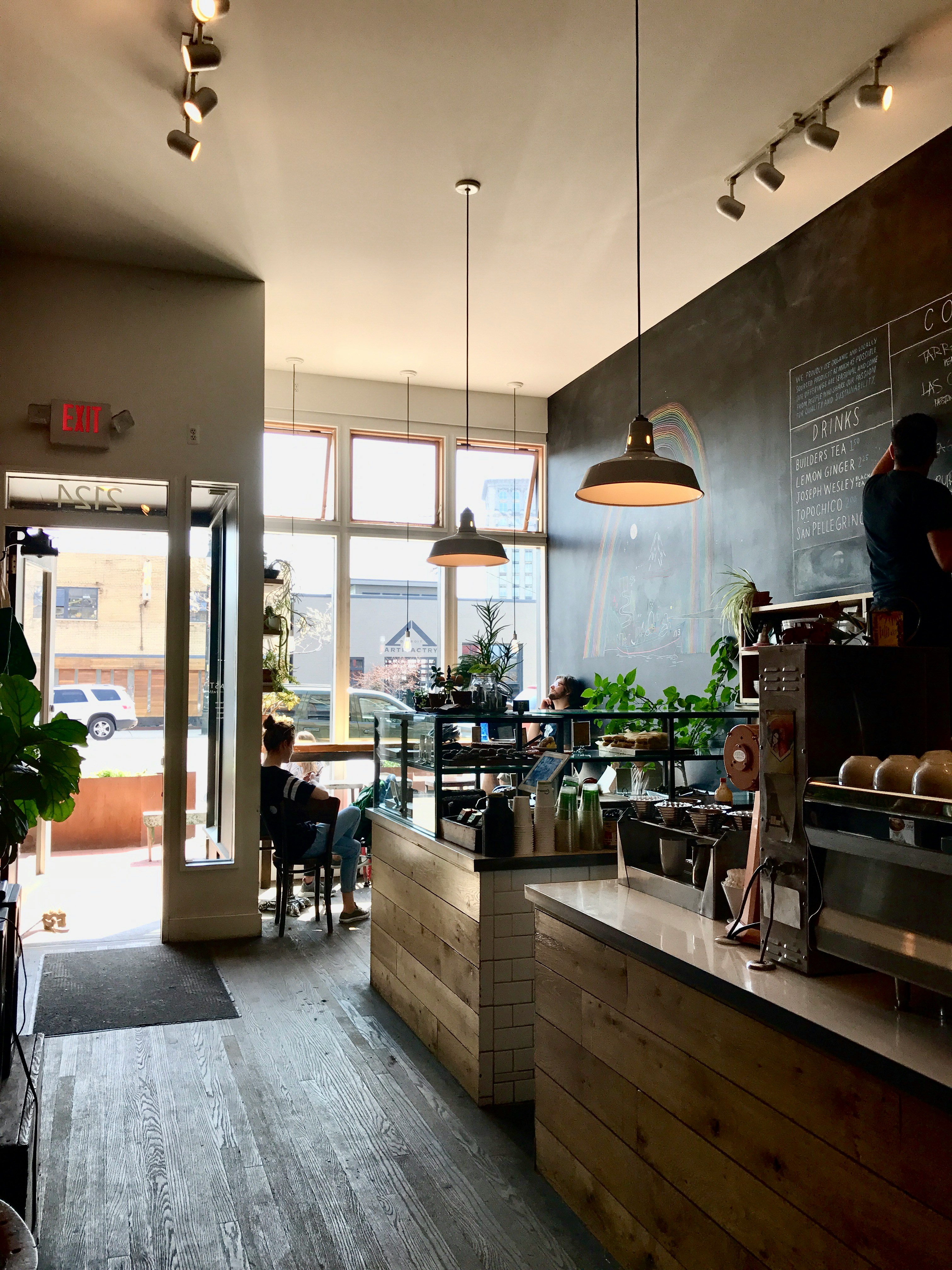
Choosing the right coffee shop POS software is one of the most consequential decisions an independent café owner makes.
It shows up at 8:12 am when the line hits the door, the Wi-Fi drops, and someone asks why their loyalty points didn't apply.
It influences how quickly you move the line, how cleanly inventory is managed, how well you understand your customers—and how easily your business can grow.
Yet most café owners don't choose their POS strategically - you choose what's affordable, familiar, or quick to set up.
So what are independent coffee shops actually using in 2026?
To answer that, we analyzed 58,548 independent coffee shops across the United States. Not chains. Not franchises. Real, owner-operated cafés navigating thin margins, peak-hour rushes, and evolving customer expectations.
Here's what the data shows—and what it means if you're evaluating coffee shop POS software this year.
How We Looked at the Coffee Shop POS Market
This analysis draws from data in the Joe Coffee ecosystem, enriched with information from Google Places, Yelp, and independent café websites.
We identified POS and ordering platforms based on:
- Public online ordering URLs
- Checkout and payment flows
- Embedded e-commerce and ordering code
Chains and franchises were excluded to focus purely on independent operators.
The Current Coffee Shop POS Landscape (2026)
Among independent cafés with detectable digital ordering or e-commerce systems, the landscape is as follows:
| Platform | Shops Using | Approx. Market Share |
|---|---|---|
| Square | 9,487 | 56% |
| Shopify | 4,281 | 25% |
| WooCommerce | 3,155 | 19% |
| Toast | 1,049 | 6% |
These platforms dominate for practical reasons—not because they're perfect. Each solves a specific problem well. The challenge for café owners is understanding where tradeoffs begin to surface over time.
Square
Why Many Single-Location Cafés Start With Square
Square is often the default choice for independent cafés because it removes friction early:
- Fast onboarding and setup
- Familiar hardware and interface
- No monthly fee on the basic tier
- Integrated online ordering out of the box
For first-time owners or lean operations, this simplicity matters.
Where Square Can Start to Strain
As volume and complexity increase, limitations become more visible:
- Rising processing fees — percentage-based fees have increased in recent years, which compounds quickly at scale
- Loyalty and customer data remain relatively shallow
- Mobile ordering and loyalty feel bolted on rather than core
- Multi-location visibility requires add-ons or workarounds
- Operators often layer on third-party tools to fill gaps
Square is an effective starting point—but many cafés outgrow it faster than expected, leaving them having to lift and shift systems.
Shopify & WooCommerce
Why Roaster-Cafés Choose Shopify & WooCommerce
When coffee becomes commerce, e-commerce platforms shine. They can accommodate the following:
- Subscriptions and recurring bean orders
- Shipping zones and fulfillment logic
- Familiar tools for digital-first brands
Among the 8,385 roaster-cafés in our dataset, Shopify and WooCommerce adoption is significantly higher than average.
Where Shopify & WooCommerce Start to Strain
These platforms weren't built for café operations. Given that, they begin to strain in the following areas:
- Not designed for in-store espresso workflows
- Require a separate POS for counter service
- Inventory often splits across systems
- Loyalty and in-store customer behavior are disconnected
- Reporting becomes manual as complexity grows
The most common setup we see—Shopify or WooCommerce online with a separate POS in-store. This works, but it introduces unnecessary operational drag.
Toast
Why Food-Forward Cafés Choose Toast POS
Toast excels in food-heavy environments such as:
- Full kitchen support
- Table service workflows
- Kitchen display systems and coursing
For cafés running substantial food programs, these features matter.
Where Toast Can Start to Strain
For espresso-first or retail-focused cafés, Toast begins to strain in these areas:
- Higher cost structure
- More operational complexity than needed
- Less flexibility for e-commerce-driven models
- Steeper learning curve for staff
Toast is powerful—but often heavier than what coffee-centric shops require.
The Surprising Reality: Most Coffee Shops Still Don't Offer Online Ordering
One of the most striking findings in the data:
Only 28% of independent coffee shops have a detectable online ordering system. That's not because owners don't care — it's because many POS setups make online ordering feel like extra work instead of leverage.
That leaves a whopping 42,000 cafés are either using:
- Cash/card only with no online ordering, or
- Mobile-first systems not visible through a website.
This means missing a meaningful revenue opportunity. For context, cafés with online ordering often see 30-40% higher average tickets during peak mobile adoption periods.
Customer expectations have evolved faster than many POS setups.
The Integration Gap Most Owners Don't Notice—Until It Hurts
Across the dataset, one pattern appears repeatedly:
Many cafés use one system for in-store POS and another for online or mobile ordering, with little connection between them.
This creates:
- Inventory mismatches
- Split customer profiles
- Manual reconciliation
- Limited insight into repeat behavior
These issues rarely feel urgent at first. They compound quietly as a business grows.
Choosing the Right Coffee Shop POS Software
There's no universal "best" POS—only the best fit for how you operate.
What we typically see:
- Single-location cafés prioritize speed and simplicity
- Roaster-cafés need e-commerce strength with clean in-store integration
- Food-forward cafés benefit from restaurant-grade workflows
- Multi-location operators require centralized reporting and shared customer data
Across every model, one theme is consistent: tool sprawl increases friction.
Where Joe Fits (and Why It Exists)
Most coffee shop POS software wasn't designed for how independent cafés operate today. Owners are often forced to stitch together one system for in-store POS, another system for mobile or online ordering and another for loyalty.
Each tool solves a narrow problem. Together? They create operational drag.
We've seen this pattern repeatedly: great cafés focused on craft and community, quietly compensating for software that was never built for them. Manual workarounds become normal. Data fragments. The stack grows clunkier as the business grows.
Joe emerged from that gap—not just to simplify operations, but to support the long-term health of independent cafés and the communities they serve.
Founded in 2018, Joe was built specifically for independent coffee shops—bringing POS, mobile ordering, loyalty - and heart - into a single, integrated platform so that café's can:
- Run in-store and mobile ordering through one system
- Capture customer behavior in one place
- Reward repeat visits without bolted-on loyalty tools
- Reduce complexity as the business grows
- And most importantly, focus on their craft, not operational chaos
The goal isn't more software. It's less fragmentation—and a simpler operating model that supports healthier margins, local culture, and long-term independence.
Joe isn't another POS to add to your stack. It's infrastructure for a healthier, independent coffee industry—from root to cup.
"Joe isn't another POS to add to your stack. It's infrastructure for a healthier independent coffee industry—from root to cup."
If you're actively evaluating coffee shop POS software—or feeling the strain of disconnected tools—see what a unified, coffee-first platform looks like in practice.
Learn more here, or book a demo to explore Joe in action.
Read more about reimagining the coffee industry, the Joe operating ecosystem and how coffee shops are using Joe.
Methodology
This analysis is based on 58,548 independent coffee shops in the Joe ecosystem, enriched with data from Google Places, Yelp, and website scraping. Platform detection relies on public ordering URLs, checkout flows, and embedded website code. Mobile-first and app-based systems may be underrepresented. Chains and franchises were excluded.
Frequently Asked Questions About Coffee Shop POS Systems
What are POS systems used for in a coffee shop?
POS systems are used to handle point of sale transactions, payment processing, and daily operations at the counter. Today, most POS systems also support online orders, menu management, inventory management, and basic back office reporting, making them a core part of modern coffee shop operations.
How have POS systems evolved in recent years?
Modern POS systems have evolved into full POS technology platforms. Instead of acting as simple registers, POS systems now function as connected POS apps that help automate tasks, support kiosk ordering, manage gift cards, and improve customer service across multiple channels.
How do POS systems support inventory management?
Inventory management is one of the most important functions of POS systems. With integrated inventory management, sales automatically update inventory levels in real time, reducing manual work and helping Coffee Shop Managers avoid stockouts or over-ordering.
Can POS systems help with employee management?
Yes. Many POS systems include basic employee management features such as shift tracking, permissions, and sales performance visibility. For a small business, this helps a business owner manage staff more efficiently without relying on separate tools.
Do POS systems support loyalty programs and customer loyalty?
Most modern POS systems include loyalty programs and customer loyalty programs that track purchases and reward repeat visits. When loyalty is built into the POS, cafés gain clearer insight into customer loyalty and can improve long-term customer satisfaction.
How do gift cards and online orders work with POS systems?
POS systems often support both gift cards and online orders through the same platform. This allows customers to order ahead, redeem gift cards digitally or in-store, and enjoy a more seamless experience while simplifying reconciliation in the back office.
What role does menu management play in POS systems?
Menu management tools within POS systems allow Coffee Shop Managers to update pricing, items, and availability in one place. This ensures consistency across registers, POS apps, online orders, and kiosk ordering, which directly impacts customer satisfaction.
How do POS systems affect customer service?
POS systems play a major role in customer service by reducing wait times, minimizing order errors, and supporting faster payment processing. When systems are intuitive and reliable, staff can focus more on hospitality rather than troubleshooting technology.
Can POS systems improve customer satisfaction?
Yes. Faster service, accurate orders, reliable payment processing, and integrated loyalty programs all contribute to higher customer satisfaction. POS systems that unify these functions help cafés deliver a smoother customer experience.
What is kiosk ordering, and how does it work with POS systems?
Kiosk ordering allows customers to place orders themselves through in-store kiosks connected to the POS system. When kiosk ordering is fully integrated, orders flow directly into the point of sale and kitchen workflow, reducing pressure on staff during peak hours.
How do POS systems support small business owners?
For a small business, POS systems provide essential visibility into sales, inventory management, and customer behavior. A business owner can use this data to make better decisions without adding operational complexity.
What should a Coffee Shop Manager look for in POS technology?
A Coffee Shop Manager should look for POS technology that balances ease of use with strong inventory management, employee management, reliable payment processing, and built-in support for customer loyalty programs.
Are POS systems different from general business software?
Yes. POS systems are purpose-built for point of sale operations, while general business software may not support real-time transactions, online orders, kiosk ordering, or customer service workflows as effectively.
How do POS systems support the back office?
POS systems feed sales, inventory, and customer data directly into the back office, reducing manual reporting. This allows Coffee Shop Managers to spend less time reconciling numbers and more time improving operations and customer service.
Why do growing cafés outgrow some POS systems?
As cafés scale, limitations in inventory management, employee management, customer loyalty programs, and reporting can emerge. POS systems that lack flexibility often require add-ons, increasing complexity and reducing efficiency.